Outdoor events depend on conditions nobody controls. The best protection is a plan agreed before the day, so decisions are quick and nobody argues about them on site.
Choose equipment for the conditions
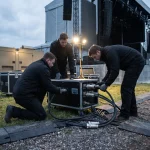
Tell us early that your event is outdoors, because not all equipment suits rain, dust or direct sun. Sound, lighting and video may need covers, weather-rated fixtures or a roofed stage. Bright daylight also affects video: an LED wall stays readable where a projector would not. Cables need protection on the ground, and power connections must stay out of standing water. Plan shade for control positions too, since heat can be as hard on equipment as rain.
Agree a wind and rain plan
Stages, roofs, banners and speaker towers all have wind limits set by the manufacturer or engineer. Ask what those limits are for your setup and who watches the forecast on the day. Name one person with the authority to pause, lower or stop an activity. Write down what happens at each step, including what the audience is told.
Keep a fallback ready
Decide what moves indoors and what gets cancelled. Check whether the site still works after heavy rain, especially for vans, forklifts and crew. Leave extra time for load-in and load-out, because wet ground slows everything. Include the site, the ground surface and your access routes in your rental request, and our offer will reflect what the location needs.